
Construction Timelapse
in Malaysia
A Complete Introduction for Project Owners & Contractors
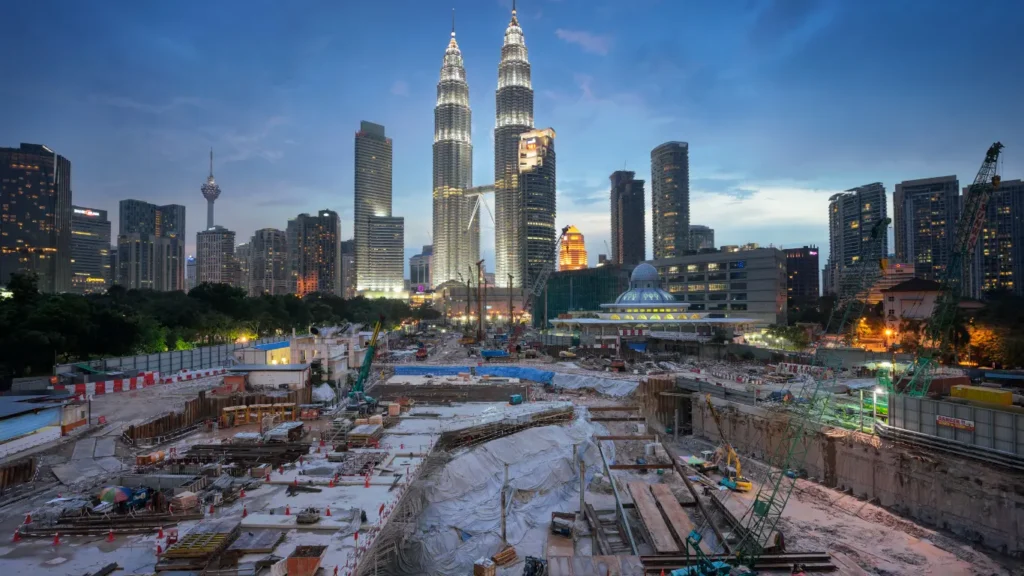
Construction projects in Malaysia are becoming larger, more complex, and increasingly accountable to multiple stakeholders. Developers, contractors, consultants, and project owners are now expected to demonstrate progress clearly, manage risks transparently, and maintain reliable project records over long durations.
Construction timelapse has emerged as one of the most practical tools to support these requirements. More than just a marketing visual, it provides structured visual documentation that supports progress tracking, reporting, and post-project review.
This guide explains what construction timelapse is, how it is typically used in Malaysia, and why it has become a standard component of modern project documentation.
What Is Construction Timelapse?
Construction timelapse refers to the use of fixed cameras installed at a project site to capture images at regular intervals over an extended period—often weeks or months. These images are later compiled into a condensed visual sequence that shows the entire construction process from start to finish.
Unlike conventional photography or video, construction timelapse is designed for long-term documentation, not short-term filming. A single camera may capture thousands of images throughout a project lifecycle, creating a visual record that reflects actual site conditions and progress over time.
In practice, construction timelapse systems operate largely unattended once installed, making them suitable for projects with long durations and limited on-site supervision resources.
Why Construction Timelapse Is Increasingly Used in Malaysia
In the Malaysian construction environment, projects often involve:
Multiple approval authorities and consultants
Distributed management teams across different locations
Long project timelines influenced by weather, approvals, and logistics
High expectations for documentation and reporting
Traditional progress reporting methods—such as written updates or ad-hoc site photos—often fail to provide consistent, objective records of site activity. Construction timelapse addresses this gap by offering continuous visual evidence of progress.
As a result, timelapse systems are now commonly considered for property developments, infrastructure works, industrial facilities, and energy-related projects where long-term visibility is critical.
Common Uses of Construction Timelapse
Construction timelapse serves multiple purposes throughout a project lifecycle. The same visual dataset can be used differently by different stakeholders.
Progress Documentation; Timelapse footage provides a clear visual narrative of how a project evolves over time. This is especially useful for long projects where progress may not be obvious from week to week.
Stakeholder Reporting; Developers and project owners can use timelapse outputs to support internal reporting, board updates, or investor communications without requiring frequent site visits.
Delay and Issue Review; When delays or disruptions occur, timelapse records can help contextualise events such as weather impacts, access constraints, or sequencing changes.
Corporate and Marketing Use; Upon project completion, timelapse videos are often used for corporate presentations, milestone announcements, or portfolio documentation.
Remote Oversight;
For management teams not based on site, timelapse provides a passive form of visual monitoring that complements written reports.
Who Typically Uses Construction Timelapse in Malaysia?
Construction timelapse is not limited to a single type of organisation. In Malaysia, it is commonly adopted by:
Property developers managing multiple sites simultaneously
Main contractors overseeing long-term works
Infrastructure project owners requiring structured documentation
Consultants and project managers supporting reporting and coordination
Corporate communications teams for post-completion use
The value of timelapse lies in its flexibility—it supports technical, managerial, and communication needs using the same underlying visual data.
How Construction Timelapse Is Deployed (High-Level Overview)
While specific system designs vary by project, most construction timelapse deployments follow a similar structure.
Fixed Camera Placement; Cameras are installed at elevated or strategic vantage points to capture consistent views of the site. The goal is long-term visibility rather than dynamic movement.
Automated Image Capture; Images are captured at predefined intervals, such as every 10 or 15 minutes during daylight hours. This frequency is chosen to balance detail with storage efficiency.
Long-Term Operation; Timelapse cameras are designed to operate continuously for months, often with weather-resistant enclosures and remote management features.
Image Retrieval and Compilation; Captured images are periodically retrieved—either via remote access or scheduled downloads—and compiled into timelapse sequences or progress visuals.
This approach allows projects to be documented passively without disrupting site operations.
Construction Timelapse vs CCTV: Understanding the Difference
Construction timelapse is sometimes confused with CCTV, but the two serve different objectives.
CCTV systems are primarily designed for real-time security monitoring, focusing on incident detection and immediate response. They operate continuously and generate large volumes of video footage.
Construction timelapse, by contrast, is focused on long-term documentation. It captures still images at intervals rather than continuous video, making it more efficient for progress tracking and historical review.
In many projects, both systems coexist—CCTV for security and timelapse for documentation—each addressing different operational needs.
Key Considerations Before Using Construction Timelapse
Before deploying a construction timelapse system, project teams should consider several practical factors.
Project Duration Timelapse systems are most effective for projects lasting several months or longer, where progress trends matter more than daily activity.
Site Access and Mounting Camera placement must remain stable throughout the project. Changes in mounting location can disrupt continuity.
Reporting Expectations Different stakeholders may require different outputs—raw image access, periodic snapshots, or compiled timelapse videos.
Data Ownership and Access Clarifying who owns the images and how they can be used helps avoid misunderstandings later in the project.
Addressing these considerations early ensures that the timelapse system supports project objectives rather than becoming a passive archive.
The Role of Construction Timelapse in Modern Project Oversight
As project teams become more distributed and projects grow in scale, visual documentation is increasingly viewed as a core component of oversight rather than a supplementary tool.
Construction timelapse contributes to this shift by providing:
Objective visual records
Reduced reliance on manual site visits
Consistent documentation across long timelines
A shared visual reference for all stakeholders
In regulated or high-value projects, this visual continuity can be especially valuable during audits, reviews, or post-project evaluations.
What TimelapseMalaysia Covers
TimelapseMalaysia is designed as a Malaysia-focused knowledge resource dedicated to construction timelapse and long-term visual documentation.
This site explores:
How construction timelapse is applied across different project types
Deployment considerations specific to Malaysian environments
Practical use cases and documentation approaches
The evolving role of visual records in project oversight
Rather than acting as a generic marketing platform, TimelapseMalaysia serves as an educational reference point for organisations evaluating or implementing timelapse solutions.
Relationship to the Broader Sivdio Ecosystem
TimelapseMalaysia operates as a specialist vertical initiative under the broader capabilities of Sivdio Imaging Sdn Bhd, which provides structured visual documentation and monitoring services across multiple industries.
While Sivdio’s main platform addresses a wider range of visual-intelligence applications, this site focuses specifically on construction timelapse as a discipline—supporting clearer understanding without overlapping commercial messaging.
FAQ
Q1: What is construction timelapse in Malaysia used for?
Construction timelapse Malaysia is used to document site progress, verify milestones, support reporting, and provide a reliable visual record for project owners, contractors, and consultants.
Q2: Who typically uses construction timelapse services in Malaysia?
Developers, main contractors, consultants, and project owners use construction timelapse to improve transparency, monitor progress remotely, and support stakeholder reporting.
Q3: Is construction timelapse suitable for government or GLC projects?
Yes. Construction timelapse is commonly used to support governance, compliance reporting, and multi-stakeholder oversight for public and infrastructure projects in Malaysia.
Q4: How long can a construction timelapse camera run on site?
Timelapse cameras can operate for weeks, months and to years depending on power availability and site conditions, with configurations designed for long-duration projects.
Looking Ahead
As construction projects continue to evolve in scale and complexity, the demand for transparent, reliable documentation will only increase. Construction timelapse offers a practical, proven method for capturing the full story of a project—one image at a time.
Future articles on this site will explore specific deployment models, project types, and documentation strategies relevant to Malaysia’s construction and infrastructure landscape.
Nadia Khalid, Sales Representative,
sales [at] timelapsemalaysia.com