
How Construction Timelapse
Is Used for Project Monitoring in Malaysia
On most construction projects, the request often starts simply: “We need a construction timelapse.”
In Malaysia, construction timelapse is commonly used as a way to visualise progress over time, especially on projects that run for many months or involve multiple work stages.
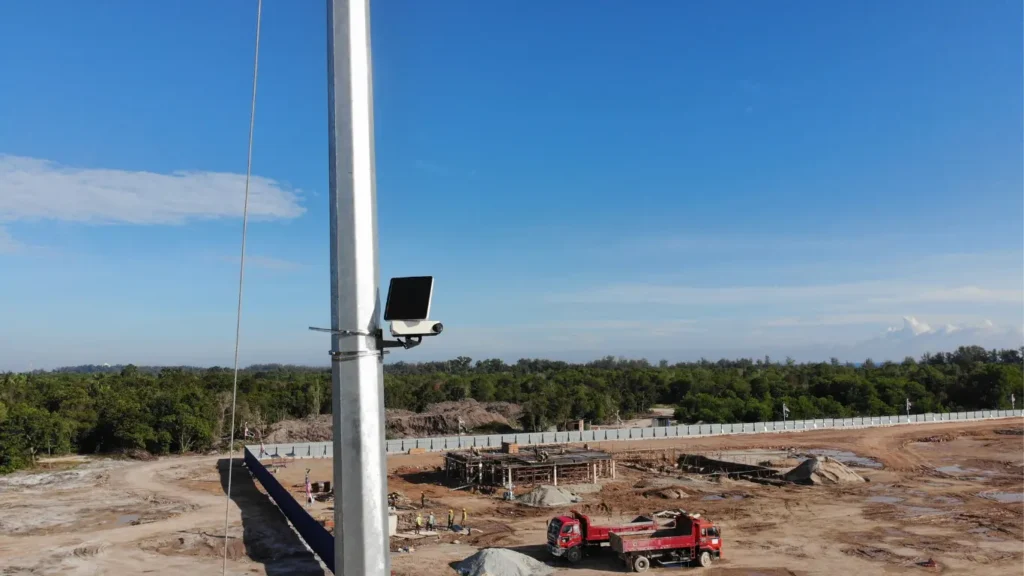
While the term construction timelapse Malaysia is widely used, its role on active projects is rarely limited to producing a final video. On operational sites, timelapse functions as a visual monitoring and documentation tool, helping project teams observe progress, maintain continuity, and communicate status across the project lifecycle.
This approach is increasingly relevant not only in Malaysia but also in Singapore, where geographically distributed teams, consultants, and stakeholders rely on visual records to support monitoring, reporting, and oversight throughout construction.
Why Traditional Construction Progress Reporting Often Falls Short
Construction progress is typically tracked through written reports, photographs, and scheduled site visits. While these methods remain essential, they can become limited as projects grow in scale or duration.
Common limitations include:
Progress updates that rely on periodic snapshots rather than continuous visibility
Photographs that lack context between reporting periods
Retrospective visual summaries produced only at the end of the project
Limited interim visibility for remote stakeholders or regional management
Gaps in visual continuity when progress needs to be reviewed or verified later
These challenges are not failures of reporting, but natural constraints when visual records are treated as isolated outputs rather than part of an ongoing documentation process.
Using Construction Timelapse for Project Monitoring
Why this matters on long-duration projects
On projects that run for many months or span multiple phases, construction activity is continuous but reporting is periodic. Timelapse provides a visual timeline that bridges this gap, allowing teams to observe how work progresses between reporting milestones without relying solely on written summaries.
When traditional reports become insufficient
As stakeholder groups expand to include consultants, management teams, or remote decision-makers, static reports and selected photographs may no longer provide sufficient context. Visual timelines help clarify sequencing, overlaps between trades, and changes over time that may not be obvious in isolated images.
How visual timeline support verification and accountability
When captured consistently, timelapse supports progress verification by preserving continuity. Instead of reconstructing events retrospectively, teams can refer back to a visual record that reflects how activities unfolded over time, supporting clearer review and discussion.
It is common for project teams to request timelapse initially for visibility. As projects progress, these same teams often find that the visual record becomes increasingly useful for monitoring, reporting, and coordination.
Typical Construction Timelapse Use Cases in Malaysia and Singapore
Infrastructure projects requiring long-term visibility across multiple work fronts
High-rise or mixed-use developments with complex sequencing between trades
Industrial and manufacturing facilities with extended construction phases
Energy and utilities projects where progress must be tracked over wide site areas
Public sector construction where documentation and transparency are expected
In each case, timelapse supports monitoring needs rather than replacing established reporting practices.
Improving Project Visibility for Key Stakeholders
Construction timelapse contributes to clearer visibility for a wide range of stakeholders. Developers gain a consistent visual overview of progress without constant site presence. Consultants can reference visual timelines alongside reports during reviews. Project management offices benefit from continuous context when coordinating schedules and resources.
For government bodies, GLCs, and regional or remote stakeholders, visual monitoring helps maintain awareness of site activity while supporting informed decision-making across locations and time zones.
From a PMO or project management perspective, visual timelines assist in tracking execution against planned sequences and reported milestones. Government and GLC stakeholders benefit from a neutral visual record that supports transparency and governance, particularly on public sector projects. Regional or remote stakeholders—who may not have regular site access—gain consistent visibility without disrupting site operations.
Positioning Construction Timelapse Within Project Documentation
Construction timelapse does not replace site supervision.
It does not replace inspections or formal certifications.
Instead, timelapse complements existing documentation and reporting by adding a continuous visual layer that supports understanding and review. As project scale, duration, or governance complexity increases, expectations around visual documentation and continuity typically increase as well.
FAQ
Q1:How is construction timelapse used for project monitoring in Malaysia?
It is commonly used to provide continuous visual visibility of site activity, supporting progress monitoring alongside traditional reports.
Q2: Can construction timelapse support monthly progress reporting?
Yes, visual timelines can complement monthly reports by showing how activities progressed between reporting periods.
Q3: Does construction timelapse replace site supervision or inspections?
No. Timelapse supports visibility and documentation but does not replace physical inspections or professional supervision.
Q4: Is construction timelapse suitable for long-duration projects in Singapore?
It is often used on longer projects to maintain continuity, especially when stakeholders are not regularly on site.
Q5: Is end-of-project timelapse sufficient for serious construction projects?
For simple visual summaries it may be adequate, but ongoing projects typically benefit more from continuous visual records.
Q6: When does construction timelapse become more than just a visual summary?
As project duration increases and stakeholder needs expand, timelapse often becomes part of the monitoring and documentation process rather than a final output.
Conclusion
Construction timelapse remains a familiar entry point for many projects, but its role extends beyond producing a final visual summary. When applied as part of project monitoring, timelapse contributes to continuity, visibility, and clearer understanding throughout the construction lifecycle.
Across Malaysia and Singapore, construction timelapse is increasingly positioned as a supporting element within broader project monitoring and documentation practices, reinforcing—not replacing—established reporting and oversight methods.
Nadia Khalid, Sales Representative,
sales [at] timelapsemalaysia.com